Posts

Showing posts with the label Annual compliance for pvt ltd

Closing of LLP in India: Steps and Procedure

Image
  Process of c losing an LLP in India  The Limited Liability Partnership (LLP) is a modern type of business entity, established in 2008 by the Limited Liability Partnership Act, that combines the features of a company and a partnership.  In previous articles, we discussed the documents required for LLP registration and the registration process itself.  In this article, we will guide you through the process of closing an LLP in India. Although LLPs offer several advantages over other types of business entities, such as ease of incorporation and limited liability for members, these benefits do not necessarily translate into successful business operations.  This article will explain the Strike Off method of closure and provide an overview of other closure options. The process to close a Limited Liability Partnership An LLP can be closed in two ways: 1. Strike-off method- a. Voluntary Strike Off The LLP should not have been engaged in commercial activities for a p...

Registration Process for Wholly Owned Subsidiary (WOS) in India

Image
Registration Process for Wholly Owned Subsidiary (WOS) in India A Wholly Owned Subsidiary (WOS) is a company whose shares or voting rights are fully owned by another company, known as the parent company. It differs from a subsidiary because a WOS implies that the parent company owns 100% of the shares or voting rights, while a subsidiary means that the parent company owns 51% or more of the subsidiary company. Foreign companies can establish a Private Limited Company in India to conduct business or invest, which would be considered a Wholly Owned Subsidiary. However, this is subject to government regulations on Foreign Direct Investment (FDI) and other applicable provisions. Requirements of Wholly Owned Subsidiaries At least one director who is a resident of India : A Wholly Owned Subsidiary company in India must have at least one director who is a resident of India. The term "resident" refers to an individual director who has resided in India for an equivalent of or m...

Appointment of Director in a company

Image
Appointment of Director in a company Introduction A company director is an individual elected by the shareholders to manage the company's affairs in accordance with its Memorandum of Association (MOA) and Articles of Association (AOA). Since a company is a legal entity, it can only act through the representation of a natural person. Therefore, the Board of Directors, consisting of living individuals, is entrusted with the management of the company. Depending on the shareholders' needs, the appointment of directors may be necessary at various times throughout the life of the business. Who can be a Director of a Company in India? To become a director of a company in India, an individual must satisfy the criteria outlined in the Companies Act, 2013, and the Articles of Association of the particular company. The requirements of the Companies Act are uniform, whereas the provisions of the Articles of Association differ from one company to another. There are two types of directors th...

How to Obtain a Well-Known Trademark: An Overview

Image
  How to Obtain a Well-Known Trademark In India, over 350,000 trademark applications were filed in the year 2019, and this number is expected to increase rapidly. By 2025, over 600,000 trademark applications are projected to be submitted annually. The Trade Mark Rules 2017 introduced a new process for declaring a trademark as "well-known."  To achieve this status, trademark owners can submit an application (TM-M form) to the Registrar. A well-known trademark receives special protection against infringement and passing off. Recognition as a well-known trademark is based on reputation, both domestically and internationally, and across borders. What is a Well-Known Trademark According to the Trademarks Act of 1999, a well-known trademark is a mark that has gained recognition among a significant portion of the public who use the goods or services associated with the mark.  This recognition is so strong that the use of the mark in relation to other goods or services is likely ...

Procedure for International Trademark Registration

Image
International Trademark Registration What is International Trademark Registration? An International Trademark refers to a trademark that has been registered worldwide. Such a trademark provides its owner with the advantage of expanding its market and applying for protection in various countries by submitting a single application through the centralized system of the International Bureau of the World Intellectual Property Organization (WIPO). Advantages of International Trademark Registration A single application is required for multiple countries. International recognition of your brand The owner of a Registered Trademark has sole ownership of the trademark. Trademark registration creates an intangible asset, namely intellectual property, for the organization. No third party or competitor may use a registered trademark logo or mark. Once a trademark is registered, only maintenance and renewal fees, payable every ten years, need to be paid. How to register a Trademark ...

Required Licenses to open Restaurant in India

Image
  Required Licenses to open a Restaurant in India The process of launching a restaurant in India can be quite daunting. However, with adequate knowledge of the necessary regulations and prerequisites, obtaining a license can become more manageable. To ensure a restaurant's smooth and lawful operation, a comprehensive list of licenses is required before its opening. Please refer to the detailed list below. 1. FSSAI License The Food License, commonly known as the FSSAI license, is one of the essential licenses that a restaurant must obtain before opening. This license is issued by the Food Safety and Standards Authority of India (FSSAI), and it holds paramount importance in determining a restaurant's eligibility to operate. More than just a license, the FSSAI license serves as an endorsement from the regulatory authority, assuring customers that the food served at the restaurant complies with India's food safety standards. Obtaining the FSSAI license can be done direc...

Change of Partners in Limited Liability Partnership LLP

Image
  Change of Partners in Limited Liability Partnership (LLP) The Limited Liability Partnership  is operated by its partners, who oversee all aspects of the business to achieve its objectives and vision. The addition or departure of partners does not affect the LLP's legal status, but it does impact the business's growth and the remaining partners' responsibilities. Any changes to the partners or their information require approval from the Ministry of Corporate Affairs. The process of adding a partner to an LLP The addition of a new partner to an existing LLP typically requires the approval of all current partners, unless the LLP agreement permits one partner to do so without the others' consent.  To join the LLP, the new partner must express their intention to do so, and after being admitted, the LLP must file Form 4 within 30 days. The form must be signed by an existing designated partner and accompanied by a certificate from a practicing company secretary or charte...

Difference in Ordinary Resolution vs Special Resolution ?

Image
Ordinary Resolution vs. Special Resolution A resolution is a formal means by which a company record decisions made during a meeting of its members. Most decisions that affect a company are required to be made through a resolution. Additionally, the company's Articles of Association, which serve as its constitution, may contain specific provisions outlining which decisions must be made through a resolution. Ordinary Resolution An ordinary resolution is one that has more votes in favor than against it, with a majority of over 50% of the members, including shareholders or directors, who attend the General Meeting either in person or by proxy. The resolution can be passed by a show of hands, polling, or electronically. Proper notice of the meeting must be given to members, and those who do not participate in voting are not considered. Typically, an ordinary resolution is required to conduct routine business at the Annual General Meeting (AGM). Ordinary resolutions are required f...

Can a Director of one company be an employee of another Company?

Image
Can a Director of one company be an employee of another Company? Who is a Director? A Director is an individual elected by the company to exercise the statutory affairs of the company and he is the one who is responsible for the management of the company’s affairs. The scope of authority of the director is limited by the provisions of the companies act 2013 and clauses in articles of association of the company. Types of Directors? Let’s understand the different types of directors that businesses usually have. Residential Director Independent Director Additional Director Small shareholders Director Alternate Director Nominee Director Shadow Director In general, there are two categories of directors: "executive" and "non-executive." An executive director may be the only director of a company and has a significant personal interest in the company's success, often as a major source of income throughout their working life. On another side, ...

Important Key points for Multi-class Trademark Application

Image
Important Key Points for Multi-class Trademark Application Introduction When a Trademark is registered, it legally safeguards the registered brand name from unauthorized usage. The registration of a trademark is determined by the kinds of goods and services offered. The Ministry of Commerce and Industry classifies all goods and services into 45 categories.  To register a brand name under a trademark, it is necessary to know the appropriate trademark category. Additionally, a product may fall into more than one category. Filing separate applications for each category can be a lengthy procedure. What is a Multi-Class Trademark Application? In order to register a service mark or trademark across two or more product or service categories, a multi-class trademark application is used. This type of application enables the applicant to register their trademark in more than one category by filing a single federal trademark application. The most obvious advantage is that the applicant...

Farmer Producer Company Registration

Image
  Farmer Producer Company Registration Farmer Producer Company (FPC) or Farmer Producer Organization (FPO) is an organization that has been designed taking into consideration the requirements of farmers, agriculturists, fishermen, weavers, milk producers, and persons engaged in farming activities, collectively known as ‘Producers’. The main intention of the Farmer Producer Company is to ensure better income for the producers through an organization of their own as the small producers do not have the volume of inputs to get the benefit of agricultural produce on large scale. Additionally, in agricultural marketing, there is a long chain of intermediaries, through which the producers receive only a small part of the value that the ultimate consumer pays. On the other hand, in the Farmer Producer Company, the producers have better bargaining power, bulk buyers of the produce, and bulk suppliers of inputs. Therefore, a Producer Company deals primarily with agriculture and post-ha...

Online Closure of Limited Liability Partnership (LLP) in India

Image
Online Closure of LLP The process of online closure of a Limited Liability Partnership (LLP) in India is similar to the process of closing a company, with the difference being that it is carried out primarily through the Ministry of Corporate Affairs' (MCA) online portal, MCA21. Here is the general process of online closure of an LLP in India. A registered LLP may face difficulties in carrying out its business operation due to adverse business conditions or lack of finance. Due to such business conditions, the partners may lose interest and intention to carry out further business activities. The government has given an option for voluntary closure of LLP, using which an LLP may apply to strike off or remove its name from the register, which is maintained by the ROC. It is one of the easier, faster, and less economical methods of Closing an LLP. It's important to note that the process of online closure of an LLP in India can be complex, and it's advisable to seek the a...

Closure of Company in India

Image
  Closure of Company in India In India, the closure of a company is a process of winding up or dissolving the business operations of a company. This can happen due to various reasons, including financial difficulties, lack of profitability, legal issues, retirement of the owners, etc. The process of closure of a company in India is governed by the Companies Act, 2013 and the Insolvency and Bankruptcy Code, 2016. A registered Company may face difficulties to carry out its business operation due to adverse business conditions or lack of finance. Due to such business conditions, the shareholders/directors may lose interest and intention to carry further business activities. The government has given an option for voluntary closure of Company, using which an company may apply to strike off or remove its name from the register, which is maintained by the ROC. It's important to note that the process of closing a company in India can be complex and time-consuming. It's advisable to...

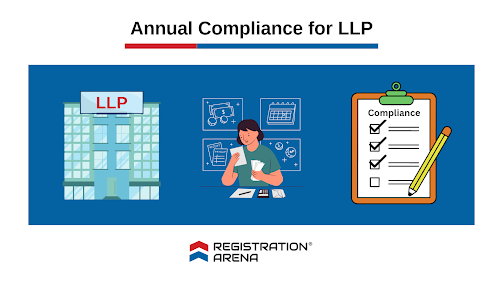
Annual Compliance for LLP

Image
Annual Compliance for LLP An LLP incorporated under LLP Act 2008 has to comply with different laws provided by authorities such as the Ministry of Corporate Affairs (MCA), Income Tax Department, GST Departments, etc. Annual Compliance of LLP is all about bookkeeping and accounting, auditing, payment of taxes, regular filing of annual returns, financial statements, Designated Partners KYC, and all other compliances as required from time to time. Every LLP incorporated in India irrespective of its size and turnover has to carry out annual compliances as applicable. An LLP is required to manage various operations in day-to-day business in line with the complex corporate and tax laws, which can be sometimes a difficult task. Therefore, it is advisable to carry out various activities under the guidance of a professional for understanding the legal requirements and timely fulfillment of the compliances so as to avoid penalties and fines. Advantages Of Annual Compliance for LLP Get an...